Mount Sibayak & Berastagi: The Complete North Sumatra Highland Guide


Perched at 1,300 metres above sea level in the Karo Highlands of North Sumatra, Berastagi is one of those places that surprises you completely. Cool air, volcanic peaks, lush highland landscapes, and a town with genuine local character — it's a world apart from the jungle heat of Bukit Lawang or the coastal bustle of Medan. And at its heart, Mount Sibayak — an active volcano with a spectacular crater, geothermal activity, and one of the most accessible summit hikes in all of Sumatra.
Heads up: this page may include affiliate links. By clicking and/or purchasing, I may receive a small commission at no extra cost for you. I only recommend tools I have personally vetted.
Practical Information
Location
Berastagi is a highland town in the Karo region of North Sumatra, sitting about 1,300 metres above sea level. Mount Sibayak rises just above the town at 2,212 metres — close enough that you can organise the hike directly from your accommodation with no fuss.
Getting There
🚗 From Medan: The most practical way to reach Berastagi is by private car or bus from Medan — approximately 3 hours by road. Unlike more remote destinations in Sumatra, Berastagi is well connected and easy to reach.
⚠️ Renting a car and driving yourself is not advisable due to road conditions in the area
✈️ By Plane: Fly into Kualanamu International Airport (KNO) in Medan, with frequent connections from Jakarta, Bali, Singapore, and Kuala Lumpur.
⚠️ From Medan, head directly to Berastagi by car or bus
👉 You can book your plane ticket here 🔗
Getting Around
Unlike more remote destinations in North Sumatra, Berastagi gives you real flexibility. You're not stuck in the middle of nowhere — the town has local transport options, and you're not strictly dependent on your hotel for every excursion. You can organise tours independently or through your accommodation, whichever you prefer.
Weather
Thanks to its altitude, Berastagi is noticeably cooler than the rest of North Sumatra — a welcome relief after the jungle heat.
☀️ Dry Season (June–August): Best time for hiking. Clear skies and manageable temperatures make for ideal summit conditions.
🌸 Transition (March–May): Decreasing rainfall, good conditions for the hike.
🍂 Wet Season (September–February): Muddy trails and limited visibility at the summit. Hiking is still possible but less rewarding.
💡 Go early — the best time to hike Sibayak is at sunrise. Cloud cover builds through the morning and visibility at the crater is best in the first light.
Accommodation
👉 I stayed at Sapo Karo Rest House 🅱️ Booking 🔗🆃 Trip.com 🔗🅰️ Agoda 🔗
I organised the Sibayak hike directly through them — easy, affordable, and well arranged. Guesthouses and homestays in Berastagi are generally around €15 per night for a double room.
Mount Sibayak
⏱️ Recommended time: half day (best done as a sunrise hike)
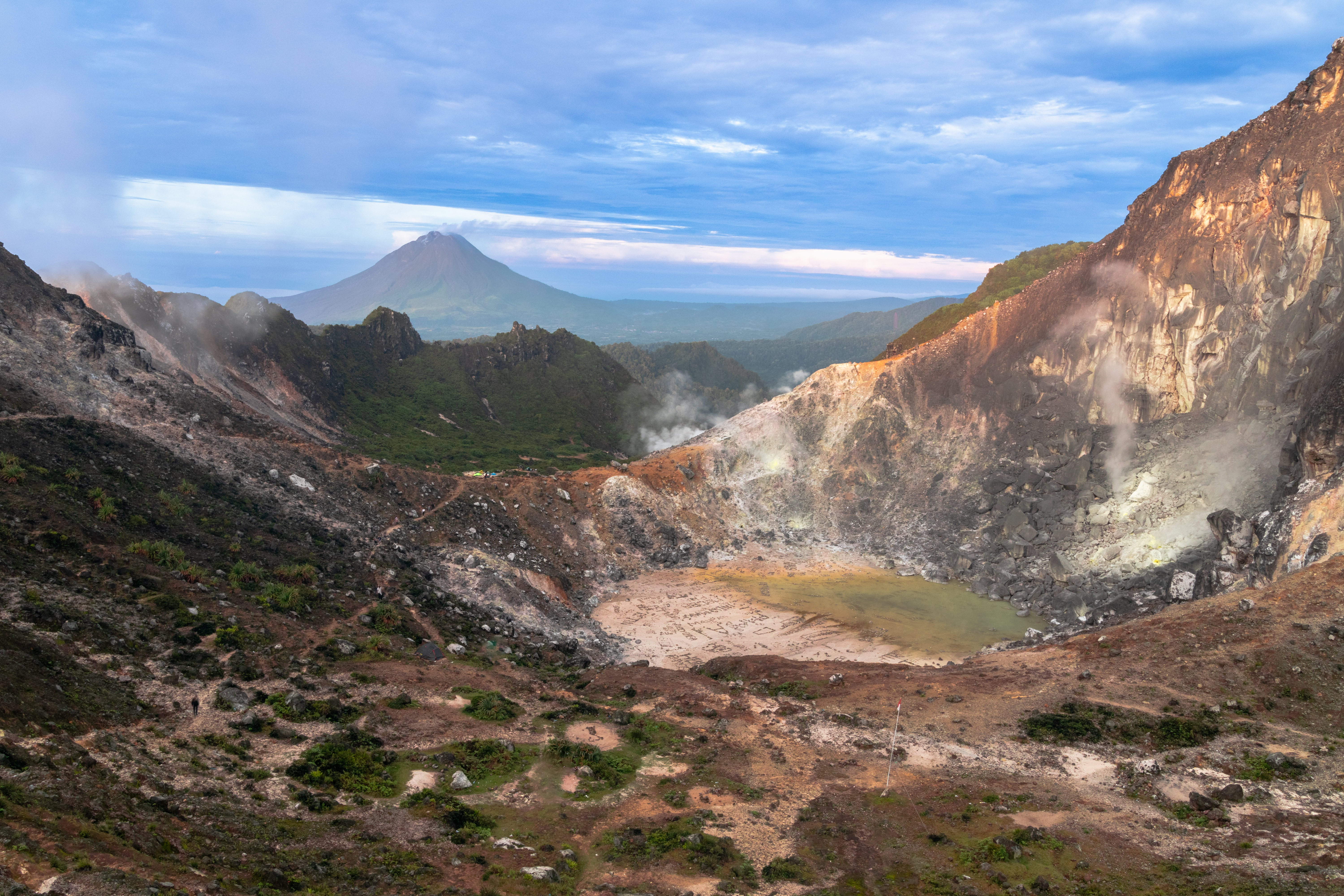
Mount Sibayak is an active stratovolcano sitting just above Berastagi at 2,212 metres — and one of the most accessible volcano hikes in all of Sumatra. The summit offers spectacular views of the steaming crater, geothermal vents, and the surrounding Karo Highlands. On a clear morning, the views are extraordinary.
The Hike
The trail starts near Berastagi — your accommodation or a local guide will arrange the transfer to the trailhead. From there, the ascent takes approximately 1 hour to reach the summit. The path is manageable but not always clearly marked, so hiring a local guide is recommended — they know the route well and the cost is very affordable.
💸 Cost: approximately €40 per person — I organised mine through Sapo Karo Rest House.
👉 Alternatively, you can book a guided sunrise tour in advance: Sunrise Tour Mount Sibayak from Berastagi🔗 — one of the best-reviewed options in the area.
Hot Springs
After the hike, don't miss the hot springs located near the volcano — the perfect way to rest your legs after the summit. A warm, steaming natural pool surrounded by volcanic landscape.
Berastagi
Beyond the volcano, Berastagi is worth exploring for its own character — a cool highland town with genuine local life and some excellent stops.
Fruit Market
If you have some time to spare, the local fruit market is worth a quick wander — Berastagi is known for its fresh produce, particularly passion fruit, oranges, and marquisa. Nothing extraordinary, but a pleasant way to spend half an hour and pick up some local fruit on the go.
Traditional Karo Villages
Just outside Berastagi, traditional Karo villages like Dokan and Lingga offer a fascinating glimpse into the indigenous culture of the highlands. Traditional Karo houses with distinctive curved roofs, daily village life, and centuries of history — a very different side of North Sumatra from the jungle and the volcano.
👉 Ready to explore more of North Sumatra? Check out the full North Sumatra Travel Guide 🔗 for everything you need to plan your trip
Related Articles
| West Sumatra Indonesia: The Ultimate Travel Guide |
| Mentawai Islands Indonesia: What Nobody Tells You Before You Go |
| 10 Essential Things to Know Before Visiting Sumatra, Indonesia |