A local's Sardinia 7 Days Itinerary


Sardinia itinerary 7 days
Planning the perfect vacation is an adventure in itself—and if Sardinia is on your radar, you’re already on the right track. The island is famous for its wild landscapes, but it’s also one of the best places in Italy for adventure seekers. Think hiking, climbing, diving, surfing—there’s always something to do.
And after all that? Incredible food. Fresh seafood, local specialties, and laid-back meals that somehow taste even better after a day outdoors.
This guide is here to help you make the most of it all—from the top sights to the best experiences—so you can dive straight into everything Sardinia has to offer.
Heads up: this page may include affiliate links. By clicking and/or purchasing, I may receive a small commission at no extra cost to you. I only recommend tools I have personally vetted.
👉Where I stayed:
- Santa Teresa di Gallura: Da Adriana Guesthouse 🅱️ Booking 🔗 🆃 Trip.com 🔗
- La Maddalena: Guest House Tra Rocce E Mare 🦉 Tripadvisor 🔗 🆃 Trip.com 🔗
- Cagliari: Rooms Loru 🅱️ Booking 🔗 🆃 Trip.com 🔗
- Galtellì: Tenuta Don Ballore 🅱️ Booking 🔗 🆃 Trip.com 🔗
- Alghero: Country Rooms 🅱️ Booking 🔗
Practical Information
Location
Sardinia is a large Italian island located in the Mediterranean Sea, just south of Corsica and west of mainland Italy.
Transportation & Exploration
✈️ Flying to Sardinia: Sardinia has three main airports, all well connected to mainland Italy and major European cities:
- Cagliari Elmas Airport (CAG) – best for southern Sardinia
- Olbia Costa Smeralda Airport (OLB) – ideal for the northeast
- Alghero Fertilia Airport (AHO) – convenient for the northwest
All airports offer regular flights from Rome and Milan, plus many seasonal international connections.
👉 You can book your flight here 🔗
🛳 Ferries to Sardinia: Traveling by ferry is a popular way to reach Sardinia, especially if you’re bringing a car. Frequent routes operate from Genoa, Livorno, Civitavecchia, Naples, and Palermo to the main ports:
- Cagliari
- Olbia
- Porto Torres
- Arbatax
⚠️ Ferries are scenic but often slow and expensive, particularly during summer and holiday periods. You need to book them in advance.
🚗 Renting a Car in Sardinia: Renting a car is the best way to explore Sardinia. The island is large, and many of its most beautiful beaches, mountain villages, and archaeological sites are not accessible by public transport.
⚠️ Driving in Sardinia is generally relaxed and safer than in many parts of Italy, but keep in mind:
- Long distances between towns
- Narrow and winding rural roads
- Animals crossing the road in inland areas
👉 Book your car on Booking 🔗
🚆 Trains & Buses in Sardinia: Public transport in Sardinia is limited and slow. Trenitalia operates main rail lines connecting Cagliari, Oristano, Sassari, and Olbia. ARST buses reach smaller towns but schedules are infrequent, especially on weekends.
⚠️ Public transport is not ideal for beach hopping or reaching remote areas.
🚶♂️ Getting Around Sardinia on Foot: Sardinian cities and towns are generally walkable, especially historic centers like Cagliari’s Castello district, Alghero Old Town, Bosa, and Oristano. Walking is the best way to explore narrow streets, local markets, viewpoints, and seaside promenades.
Weather
Sardinia experiences a Mediterranean climate, with hot summers and mild winters. Here’s a seasonal breakdown:
- ☀️ Summer (June to August): Expect hot, dry weather with temperatures between 25°C to 35°C (77°F to 95°F). This is peak tourist season, ideal for beach days and water activities.
- 🍂 Autumn (September to November): Warm temperatures between 18°C to 28°C (64°F to 82°F) make it ideal for swimming and hiking, with the island less crowded. Rainfall gradually increases as autumn progresses.
- ❄️ Winter (December to February): Winters are mild, ranging from 8°C to 15°C (46°F to 59°F), though rain is more common, especially in the higher regions.
- 🌸 Spring (March to May): With temperatures from 15°C to 25°C (59°F to 77°F), spring is beautiful in Sardinia, with blossoming landscapes perfect for hiking and exploring.
Best places to visit in Sardinia
Maddalena Archipelago, Caprera & Porto Pollo
If you’re looking for the most iconic coastal scenery in Sardinia, this is where your journey should begin.
The Maddalena Archipelago is one of the most iconic areas in Northern Sardinia. It combines dramatic coastlines, crystal-clear water, and small islands that feel completely untouched.
👉 La Maddalena is the main island and the base for exploring the archipelago. The historic center is small but charming, with pastel-colored buildings, cafés, and a relaxed seaside atmosphere.
A great way to explore the island is by driving along Strada Panoramica, a coastal road that wraps around La Maddalena and reveals endless turquoise coves and rocky viewpoints.
Some of the most beautiful beaches here include Bassa Trinita Beach, known for its white sand and sunset views, Cala Spalmatore, a sheltered bay perfect for families, and Punta Tegge Beach, where pink granite rocks meet shallow, transparent water.
Just across a small bridge lies Caprera, a protected island that feels much wilder and more natural.
Caprera is where Sardinia becomes truly raw. Pine forests, hidden coves, and hiking trails define the landscape. The most famous beach is Cala Coticcio, often called “Tahiti” for its tropical look, but it can only be reached via a hike or guided access. Another highlight is Cala Brigantina, quieter and equally spectacular.
✨ Caprera is one of those places that feels almost untouched compared to the rest of Italy, especially outside peak season

Not far from here, Porto Pollo adds a completely different energy to the area. Known for its constant winds, it’s one of the best spots in Sardinia for windsurfing and kitesurfing, but also a great place to relax by the beach and watch the sunset after a day of exploring.
✨ This entire northern area offers the perfect mix of wild nature, beaches, and outdoor activities, making it an ideal start to your Sardinia itinerary
📌 Practical Tips
- Stay in Palau or La Maddalena to easily explore the whole area
- A car or scooter is the best way to reach beaches and viewpoints
- Visit early morning or late afternoon to avoid crowds in high season
- Boat tours are the best way to discover hidden coves and nearby islands
👉 If you want to explore this area in more detail, including beaches, viewpoints, and practical tips, you can read my complete guide to La Maddalena and Caprera🔗
Capo Testa and Valle della Luna
For a landscape that feels completely different from the typical beach scenery, Capo Testa is a must.
Capo Testa is one of the most surreal landscapes in Sardinia. Located near Santa Teresa Gallura, it is made of giant granite formations shaped by wind and time, creating a natural sculpture park.
Walking through the area feels almost otherworldly. Hidden paths lead to small coves with crystal-clear water, while the granite rocks create endless natural viewpoints over the sea.
Inside Capo Testa lies Valle della Luna, a secluded valley that has long attracted free spirits and travelers looking for peace and isolation. The white rock formations and quiet atmosphere give it a unique, almost lunar feel.
✨ At sunset, the hike down to the beach becomes one of the most magical experiences in northern Sardinia.

👉 For a deeper guide, including hiking routes, hidden spots, and sunset tips, check out my full article on Capo Testa and Valle della Luna🔗
📌 Practical Tips
- Wear proper shoes if you plan to explore the rocky paths
- Bring water, especially in summer, as services are limited
- Sunset is the best time for both light and atmosphere
- Avoid midday visits in peak summer due to heat and lack of shade
Gulf of Orosei
If you are looking for the most dramatic coastline in Sardinia, the Gulf of Orosei is the next essential stop.
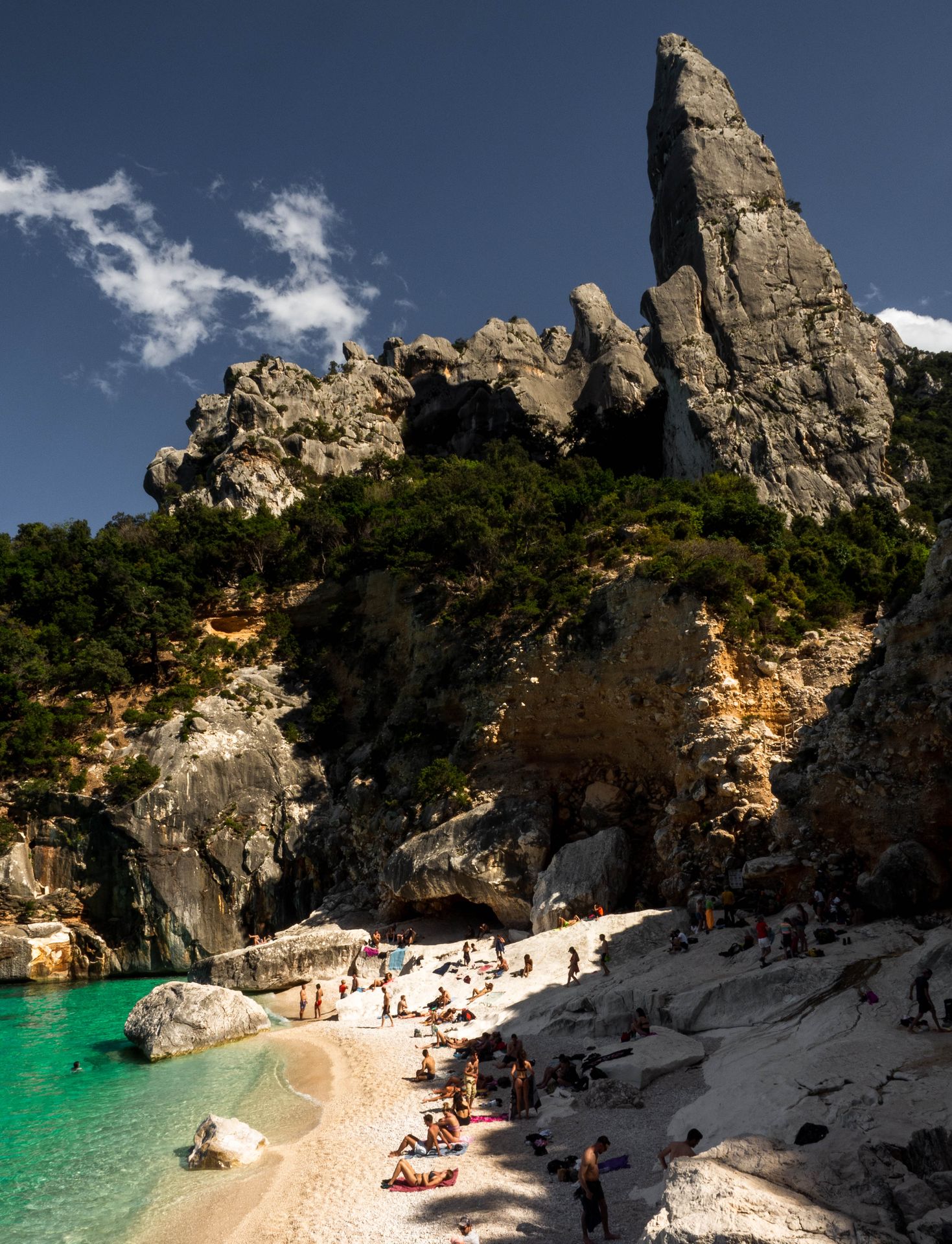
The Gulf of Orosei is one of the most spectacular coastal areas in Europe, known for its hidden beaches and dramatic limestone cliffs. Many of its beaches are only accessible by boat or hiking.
Cala Goloritzé is the most famous, a UNESCO World Heritage Site with a natural rock arch and bright turquoise water. It requires either a long hike or a boat trip with limited daily access.
Cala Luna is known for its caves and golden sand, while Cala Mariolu stands out for its white-pebble beach and incredibly clear water. Cala Sisine offers a wider and more open landscape surrounded by cliffs.
✨ The Gulf of Orosei is the ultimate expression of wild Sardinia: remote, dramatic, and unforgettable.
📌 Practical Tips
- Choose between hiking or boat tours depending on your travel style
- Book boat tours in advance during summer months
- Bring cash for entrance fees and basic expenses on-site
- Start hikes early in the morning to avoid heat and crowds
👉 If you’re planning to visit this coastline, I’ve put together a detailed guide with beaches, hikes, and boat tours in my Gulf of Orosei article🔗
Barbagia (Inland Sardinia)
After exploring the coast, heading inland reveals a completely different side of Sardinia.
Barbagia represents the wild heart of the island, far from the coast and tourism. This mountainous region is full of traditions, ancient villages, and dramatic landscapes.
One of the most impressive natural sites is Su Gorropu Gorge, one of the deepest canyons in Europe. Reaching it involves a scenic hike through rugged terrain and mountain views.
The nearby villages of Mamoiada, Orgosolo, and Gavoi offer a deep cultural experience. Orgosolo is famous for its murals covering entire streets, while Mamoiada is known for its traditional masks and ancient festivals.
Food here is deeply rooted in tradition, with dishes like porceddu, culurgiones, and local Cannonau wine defining the experience.
✨ This is the most authentic and culturally rich side of Sardinia.

📌 Practical Tips
- Renting a car is essential due to limited public transport
- Plan routes carefully as mountain roads are slow and winding
- Combine multiple villages in the same day to save time
- Book agriturismi in advance for authentic local food experiences
👉 To better understand this region, including villages, traditions, and food experiences, you can read my complete guide to Barbagia🔗
Alghero, Bosa & Capo Caccia
Continuing west, the landscape changes again as you reach the Catalan-influenced town of Alghero.
Alghero is one of the most atmospheric towns in Sardinia. Its historic center is enclosed by ancient walls overlooking the sea, and walking along the Bastioni at sunset is one of the highlights of the trip.
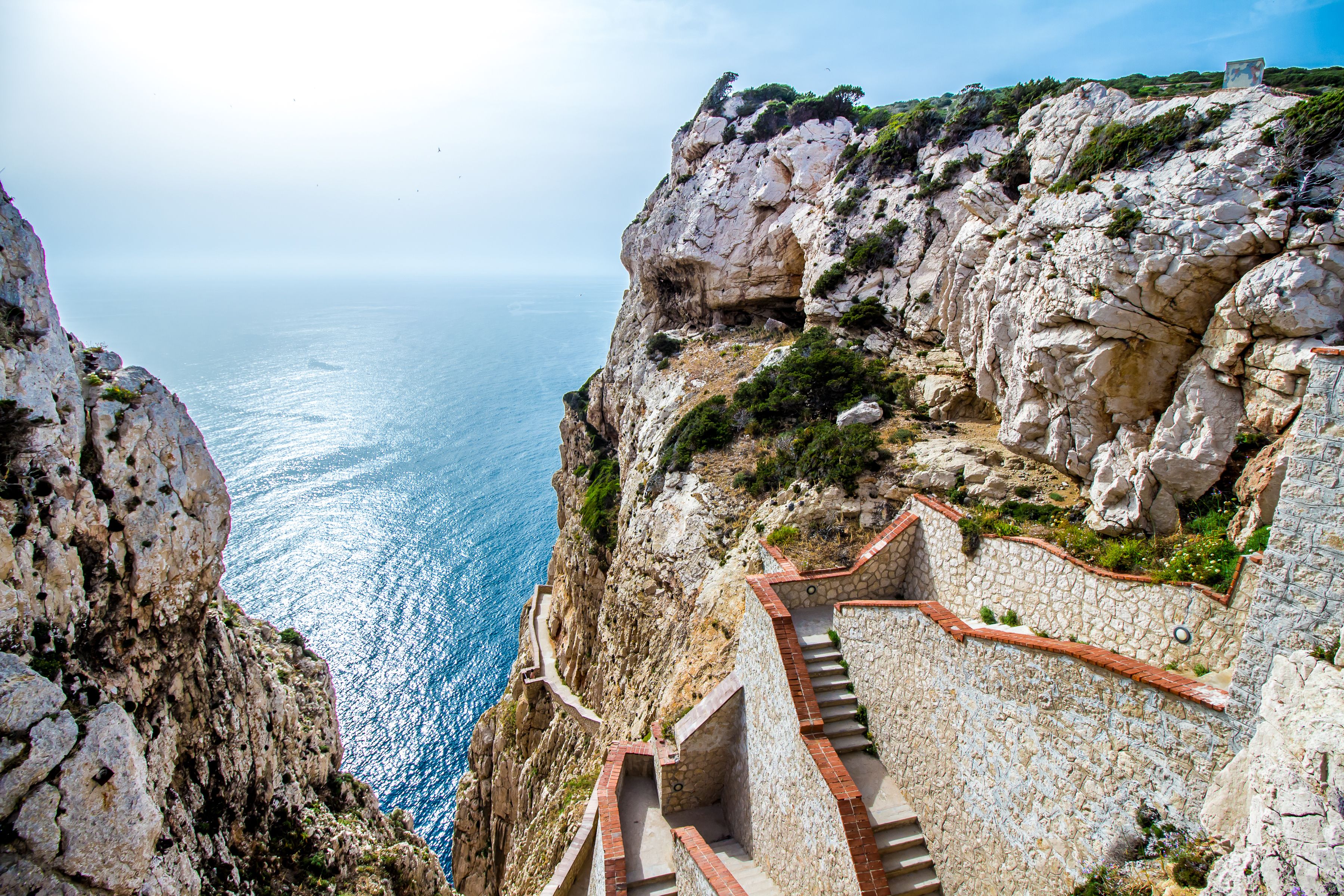
Nearby, Neptune’s Grotto is one of Sardinia’s most impressive natural attractions, accessible by boat or via a long staircase carved into the cliffs.
Just outside the town, Capo Caccia offers one of the most iconic coastal views in Sardinia. This dramatic limestone promontory overlooks the sea and is the perfect place to experience sunset, when the sky turns orange and pink over the Mediterranean.
✨ It’s one of those simple but unforgettable moments of the trip.
A short scenic drive south brings you to Bosa, one of the most picturesque towns in Italy. Built along the Temo River, it is known for its colorful houses and the hilltop Malaspina Castle, offering wide views over the valley.
Bosa feels slower and more authentic, making it a perfect contrast to the coastal energy of Alghero.
📌 Practical Tips
- Explore Alghero’s historic center entirely on foot
- Visit Capo Caccia and Bastioni at sunset for the best views
- Allow extra time for the scenic but slow drive between Alghero and Bosa
- Park outside historic centers where access is limited
👉 For a more detailed itinerary, including what to see, where to go, and practical tips, check out my full guide to Alghero and Bosa🔗
Asinara National Park
From the northwest coast, the journey continues to one of Sardinia’s most untouched and protected places.
Asinara is a remote island turned national park, where access is strictly regulated to preserve its ecosystem. There are no private cars, and visits are limited to guided tours or boat excursions.
This isolation is exactly what makes Asinara special. The landscapes are wild, the beaches are empty, and the sea is among the clearest in Sardinia.
Exploring the island means slowing down completely, whether you choose a guided experience on land or a boat trip along the coastline, stopping at hidden coves and swimming in crystal-clear water.
✨ It’s one of the few places in Sardinia that still feels completely untouched

📌 Practical Tips
- Book tours in advance due to limited access to the island
- Choose between boat or guided land excursions
- Bring everything needed for the day (water, food, sunscreen)
- Expect no private transport and very limited facilities on the island
👉 If you’re planning to visit Asinara, you can read my complete guide🔗 with tours, how to get there, and what to expect on the island
Related Articles
| A Local's Guide: Best Food in Sardinia |
| 5 Unique Things to Do in Sardinia like a Local |