A Local's Guide: Asinara Island Italy


Asinara Island: Sardinia's Most Untouched Secret
Planning a trip to Sardinia is an adventure in itself — and if Asinara is on your radar, you're already thinking like a seasoned traveller. This small island off Sardinia's northwestern tip is famous for its wild, preserved landscapes, but it's also one of the most unique places in Italy for those who want something completely different. Think boat trips through crystal-clear water, deserted beaches, roaming albino donkeys, and the eerie ruins of a former maximum-security prison.
And after all that? You're back on the Sardinian mainland in time for fresh seafood and a cold Ichnusa on the harbour at Stintino.
This guide is here to help you make the most of a day — or more — on Asinara, from how to get there to the best way to experience it.
Heads up: this page may include affiliate links. By clicking and/or purchasing, I may receive a small commission at no extra cost to you. I only recommend tools I have personally vetted.
Practical Information
Location
Asinara is a small island located off the northwestern tip of Sardinia, just north of Stintino and the Stintino Peninsula. It's part of the Asinara National Park and is one of Italy's most protected natural areas.
Transportation & Exploration
🚢 Ferry from Stintino: The most common way to reach Asinara is by ferry from Stintino, a small fishing village about 45 minutes north of Sassari. Ferries run seasonally (roughly April to October) and the crossing takes around 30 minutes.
👉 You can purchase the tickets with the Ensamar🔗 or Delcomar🔗 ferry companies
⛵ Boat excursion: I highly recommend this option instead. A boat trip lets you fully appreciate the stunning crystal-clear waters, stop at remote beaches that ferries don't reach, and experience the island at your own pace. The sea around Asinara is breathtaking. I booked my day trip with Amaremare Sardegna 🔗 — it was unforgettable.
✨ You can book a tour here 🔗
🚗 Getting to Stintino: Renting a car is the best way to reach Stintino from wherever you're based in Sardinia. The roads are straightforward, though keep an eye out for animals crossing in rural stretches.
⚠️ Once on the island, private vehicles are strictly prohibited. You explore on foot, by bicycle, or on organised jeep tours with licensed guides. This isn't a limitation — it's what keeps the place special.
👉 Book your car on Booking 🔗
⚠️One more thing: The island is larger than it looks on a map — about 52 square kilometres. If you're exploring independently, plan your route carefully and bring significantly more water than you think you need. There are no shops inside the park.
Weather
Asinara shares Sardinia's Mediterranean climate, but being an exposed island, wind can pick up even in summer. Here's what to expect:
☀️ Summer (June to August): Hot and dry, 25°C–35°C. Peak season for boat trips and swimming. Book tours well in advance.
🍂 Autumn (September to October): Warm, less crowded, still perfect for swimming and hiking. The best kept secret for timing your visit.
🌸 Spring (April to May): Mild temperatures, wildflowers, and almost no tourists. Ideal if you want the island mostly to yourself.
❄️ Winter (November to March): Most boat tours don't operate. The island is accessible by ferry but services are very limited.
Accomodation
There are no hotels or accommodation options on Asinara itself — the island is a protected national park and overnight stays are not permitted. The most practical base for your visit is Stintino, a small fishing village just a short ferry ride away and the main departure point for the island. It has a good range of hotels, guesthouses, and holiday rentals, and it's worth spending at least one night there to catch an early boat:
- Luxury: B&B Mare di Fuori 🅱️ Booking 🔗
- Mid-range: Bed and Breakfast La Reale 🅱️ Booking 🔗 🆃 Trip.com 🔗
- Budget: Gassa d amante 🅱️ Booking 🔗
If you prefer a larger town with more options, Alghero is about an hour's drive south and makes a great base — especially if you're combining Asinara with other spots in northwestern Sardinia.
👉 You can check out my article for Alghero🔗
What to See on Asinara
The Albino Donkeys
The true icons of Asinara Island aren’t beaches or ruins — they’re the surreal, snow-white albino donkeys. Smaller than mainland breeds and completely unique to the island, they roam freely through the Mediterranean scrub, often appearing suddenly along dusty tracks or near abandoned buildings.
They’re surprisingly confident around humans. Don’t be surprised if one blocks your path or watches you with mild curiosity as you pass. Seeing them in this wild, untouched setting — with no fences, no crowds, and the sea in the background — feels almost cinematic.

Cala d'Oliva and the Old Prison
At the northern end of the island lies Cala d'Oliva, a place where Asinara’s haunting past becomes impossible to ignore. This quiet settlement was once the heart of one of Italy’s most notorious maximum-security prisons, operational for much of the 20th century.
Before that, the island served as a quarantine zone and even a World War I internment camp — layers of history that give the place a strange, heavy atmosphere.
Walking through the former prison complex is an experience that lingers. You’ll pass:
- Rusting watchtowers overlooking an impossibly beautiful sea
- Empty cells left almost as they were
- A football pitch slowly being reclaimed by nature
It’s not dramatic or staged — just eerily still. The silence is what makes it powerful.
The Beaches
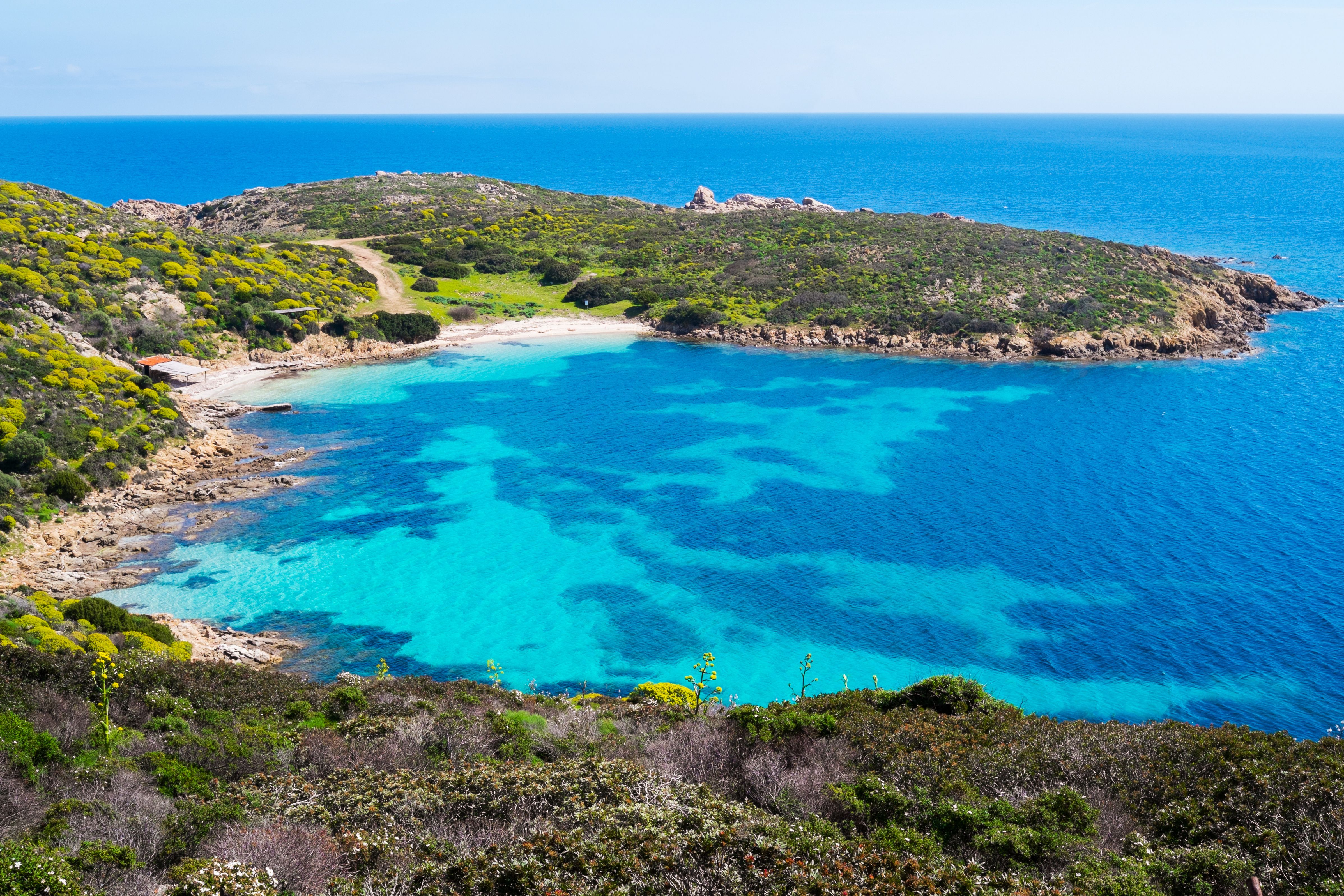
Then there are the beaches — wildly contrasting with the island’s austere history. Spots like Cala Sabina, Cala Sant'Andrea, and Cala Reale feel almost unreal.
The water shifts between electric turquoise and deep sapphire, so clear it barely looks natural. On most days, you won’t be competing for space — sometimes you’ll have an entire stretch of coastline nearly to yourself.
Some areas, like Cala Sant’Andrea, are strictly protected and can only be admired from a distance — a reminder that this island isn’t just beautiful, it’s carefully preserved.

✨The Bottom Line: Asinara isn’t a typical Sardinian beach escape. It asks for a bit more effort — planning transport, respecting restrictions, embracing simplicity — but gives something far rarer in return.
It’s a place of contrasts: wild nature and human history, silence and sea, beauty and unease. The kind of destination that doesn’t just look good in photos, but stays with you long after you leave.
Thanks to its status as a protected national park, Asinara National Park remains exactly as it should be — raw, fragile, and largely untouched.
Bonus Tip: Don’t Miss La Pelosa
If you’re passing through Stintino on your way to Asinara, carve out some time for La Pelosa Beach — one of the most famous beaches in all of Sardinia.
Think shallow, crystal-clear water that fades from pale blue to turquoise, fine white sand, and the iconic Aragonese watchtower rising just offshore. It’s the kind of place that looks unreal in photos — and somehow even better in person.

That said, it’s no secret anymore. In peak season, access is limited and regulated to protect the fragile ecosystem, so booking in advance is essential. Go early in the morning or later in the afternoon if you want to experience it at its best.
Consider it the perfect contrast to Asinara: more polished, more popular — but still absolutely worth it.
👉 If you’re planning a broader trip, check out my complete Sardinia travel guide🔗 — everything you need to explore the island beyond Asinara Island
Related Articles
| A Local's Guide: Best Food in Sardinia |