A Local's One Day Itinerary Catania Sicily


Having explored countless corners of Italy, I can confidently say that Catania captures the very essence of Sicily's spirit. Nestled between the sparkling Mediterranean Sea and the towering presence of Mount Etna, this city is a place where raw energy meets timeless beauty. Its streets are alive with history, from ancient ruins and grand baroque architecture to bustling markets filled with local flavors and voices. Catania isn't polished for tourists — it's authentic, vibrant, and unapologetically Sicilian, offering a true taste of the island's culture, traditions, and resilience. Some describe it as loud, chaotic, and even a bit gritty — and honestly, that's exactly why I love it.
Heads up: this page may include affiliate links. By clicking and/or purchasing, I may receive a small commission at no extra cost for you. I only recommend tools I have personally vetted.
Practical Information
Location
Catania, set on the eastern coast of Sicily at the foot of Mount Etna, is a city of striking contrasts and endless discoveries. Here, ancient ruins stand alongside grand baroque facades, and daily life unfolds with a rhythm that feels both timeless and electric.
Transportation & Exploration
✈️ By Plane: Catania is home to Fontanarossa Airport (CTA), the busiest airport in Sicily, just a few kilometres from the city centre with frequent connections to major Italian and European cities.
👉 You can book your plane ticket here🔗
🛳 By Ferry: You can also reach Sicily by ferry from mainland Italy (Naples, Reggio Calabria, Villa San Giovanni) or other Mediterranean destinations. The main ports are in Palermo, Messina, and Catania.
⚠️ I wouldn’t recommend it – it’s costly and takes a long time.
🚗 By Car: If you’re visiting Catania, having a car can be useful for day trips to Mount Etna, Taormina, or the baroque towns nearby—but when it comes to the city itself, it’s best to leave the car behind. Driving in Catania can feel chaotic, with narrow streets, heavy traffic, and locals who drive with plenty of flair.
👉 Instead, park in a monitored lot on the edge of the center (easily found on Google Maps) and explore on foot. The city’s historic heart is compact, walkable, and full of life—much easier to enjoy without the stress of navigating by car.
👉 You can book your car on Booking🔗
🚆 Metro: Catania has a small but handy metro system, operated by Ferrovia Circumetnea. It runs along a single line with about a dozen stations, connecting the city center to the suburbs and reaching places like the main train station. While limited, it’s inexpensive, efficient, and a good way to avoid city traffic. For most visitors, though, the historic center is best explored on foot.
🚶♂️ On Foot: Catania is best explored on foot, especially its historic center, where every corner bursts with character. From lively markets like La Pescheria, to ornate baroque churches, elegant piazzas, and narrow streets buzzing with local life, most of the city’s main attractions are within easy walking distance. Pack comfortable shoes, take your time, and let yourself wander—Catania’s charm is best discovered step by step.
👉 Exploring the city on foot is one of the most authentic experiences you can have, and this walking tour is perfect for discovering stories you’d otherwise miss. I recommend taking a look here🔗
Weather
Sicily enjoys a classic Mediterranean climate with hot, dry summers and mild winters:
☀️ Summer (June–August): Hot and sunny, 28°C–35°C. Great for the city but intense inland — follow the locals and take a long lunch break.
🍂 Autumn (September–November): Warm and pleasant, 18°C–28°C. Fewer tourists and a fantastic atmosphere.
❄️ Winter (December–February): Mild, 10°C–16°C. Quiet and atmospheric — and you can even ski on Mount Etna!
🌸 Spring (March–May): Lovely, 15°C–25°C. Ideal for sightseeing without the summer crowds.
💡 My favourite time? October — the heat is gone, the city is alive, and Mount Etna looks stunning against the autumn sky.
Accommodation
Catania isn't the safest city in Sicily, so choose your accommodation carefully. I recommend staying near the Borgo metro station🔗 — convenient and generally safer. If you're driving, always use a monitored parking lot. Below are some options:
- Luxury: Domus Cerere 🅱️ Booking 🔗
- Mid-range: ROOMS alCentro 🅱️ Booking 🔗🆃 Trip 🔗
- Budget: Domus Coralla B&B 🅱️ Booking🔗🆃 Trip 🔗🦉 Tripadvisor 🔗
One Day in Catania: The Itinerary
🌅 Morning
Breakfast — Pasticceria Savia or Spinella
Start your morning the Sicilian way — granita with brioche at Pasticceria Savia 🔗 or Pasticceria Spinella 🔗. Creamy, cold, and utterly perfect at any hour. If you're feeling adventurous, try the iris catanese — a fried brioche filled with custard or ricotta, crispy outside and dangerously good inside. But don't say I didn't warn you. 😄
La Pescheria — Catania Fish Market🔗
Just behind Piazza del Duomo, La Pescheria is one of the most authentic experiences in the city. Go early — the market is at its best in the morning, loud and chaotic and full of life. Vendors shout, swordfish gleam on ice, and the whole scene feels like it hasn't changed in centuries. Even if you're not buying anything, just being there is an experience.
Piazza del Duomo, Fontana dell'Elefante & Via Etnea
From the market, walk to:
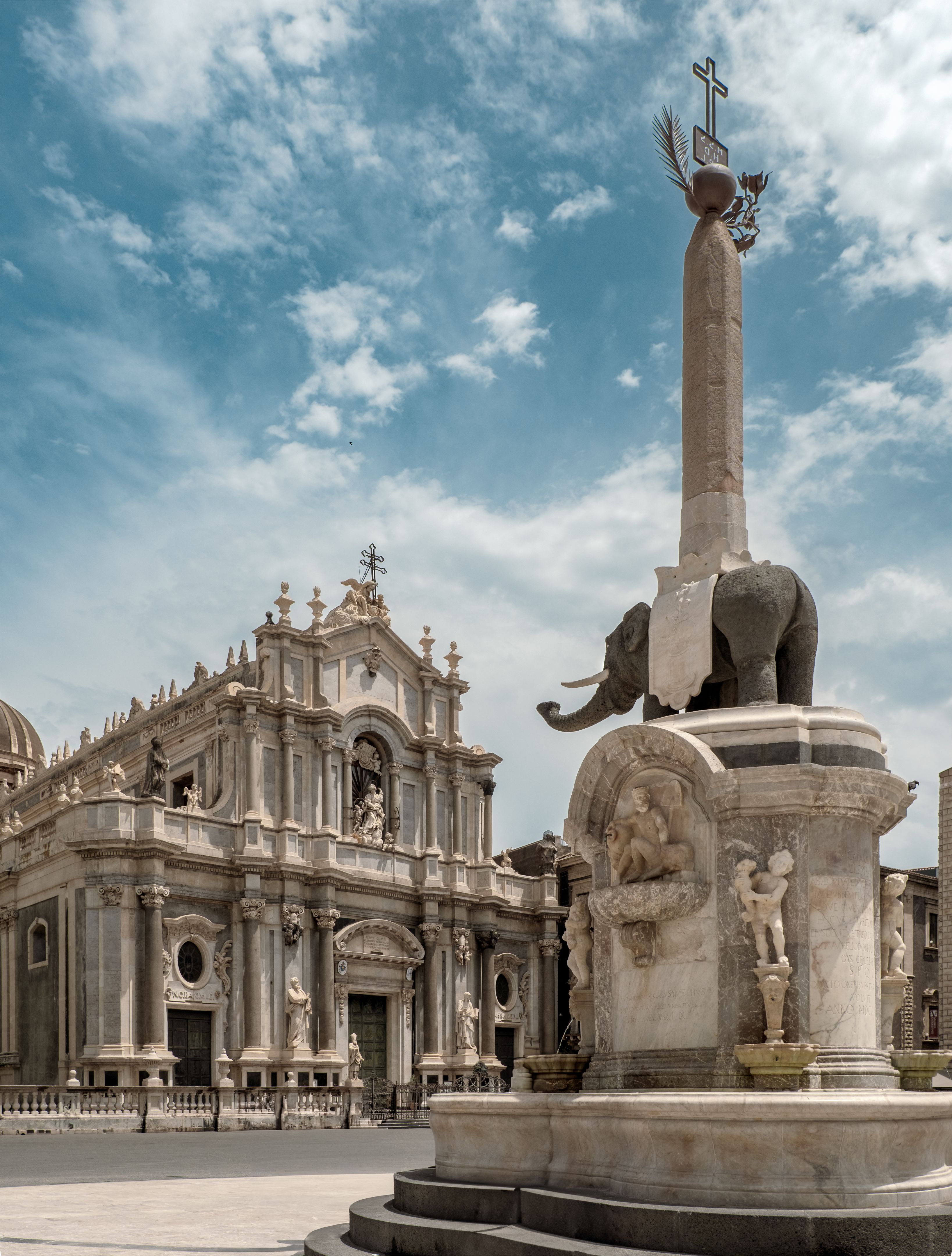
- Piazza del Duomo🔗— a UNESCO World Heritage Site and the beating heart of Catania.
- Cattedrale di Sant'Agata 🔗 — the city's magnificent baroque cathedral dedicated to its patron saint, and one of the most important churches in Sicily.
- Don't miss the Elephant Fountain🔗— the city's quirky symbol: a black lava elephant carrying an Egyptian obelisk.
- Via Etnea 🔗— Catania's main corso, lined with baroque palaces, shops, and some of the best people-watching in Sicily.
👉 To get the most out of Catania's history, consider joining a guided walking tour 🔗 — well worth it
☀️ Afternoon
Roman Amphitheatre🔗 & Odeon🔗
History lovers will enjoy exploring Catania’s Roman ruins, located just off Piazza Stesicoro. The Anfiteatro Romano, partly built from volcanic lava stone, once hosted up to 15,000 spectators for grand events and gladiator fights, while the nearby Odeon, a smaller and more intimate theater, was reserved for music and performances.
💸 Entrance to the Roman Amphitheatre and Odeon costs 6€
👉 You can find more details on the official website here🔗
Castello Ursino🔗
One of the most important Norman castles in Sicily, Castello Ursino dates back to the 13th century and is a remarkable piece of Catania's layered history. Built by Frederick II of Sicily, it now houses the city's civic museum. It's often overlooked by visitors — which makes it all the more worth a visit.
🕐 Open every day, 09:00/09:30 – 18:00/19:00 (last entry one hour before closing).
💸 Full price: €6,00
🌙 Evening
Via Plebiscito🔗 — the Horse Meat Road
If you want to experience Catania like a true local, head to Via Plebiscito for dinner — a lively street famous for its rustic osterie serving grilled meats, especially horse meat, a Catania specialty. Open grills line the street, the smoky aroma fills the air, and locals enjoy hearty plates late into the night. It's not for the faint of heart, but it's one of the most authentic experiences the city has to offer.
✨ My recommendation: Re Carlo V🔗 — affordable, unpretentious, and exactly where a local would take you. Don't miss the polpette di cavallo with pistachio and Philadelphia cheese. Trust me on this one.

👉 Ready to explore more of Sicily? Check out the full 2-week Sicily itinerary 🔗 for everything you need to plan an unforgettable trip across the island
Related Articles