Chiang Mai in 3 Days: Where the North Begins


Chiang Mai was not what I expected. I arrived thinking it would be a quieter, slower version of Bangkok — a pleasant stopover on the way somewhere else.
The north is a completely different Thailand. Where Bangkok overwhelms you with noise and density, Chiang Mai draws you in with something harder to name — a pace, a texture, an ease. Ancient temples sit inside a moated old city that you can walk across in twenty minutes. The mountains are visible from the streets. The food is its own cuisine entirely, distinct from anything in the south. And the markets — the night markets, the Sunday market, the morning markets locals actually use — are among the best in Southeast Asia.
This is a city that rewards slowing down. Three days is enough to understand it. More is better.
Practical Information
Recommended Stay
Minimum 3 days and 2 nights.
💡 More if you want to explore the surrounding mountains, waterfalls, and hill tribe villages.
Transportation & Exploration
Thailand is one of the easiest countries to travel around in Southeast Asia. Domestic flights are frequent and affordable, and long-distance transport is well developed in almost every direction.
✈️ By Plane: Chiang Mai is served by Chiang Mai International Airport (CNX), located just 4km from the old city centre — one of the most conveniently placed airports in Southeast Asia.
- Most domestic flights connect through Bangkok (mainly Don Mueang), though there are also direct international routes from several Asian cities.
- The airport is close enough that a Grab into the centre takes under 15 minutes and costs very little.
👉 You can book your plane ticket here🔗
🚌 By Bus & Train: Chiang Mai is well connected to Bangkok and other northern cities by land.
- The overnight train from Bangkok (Hua Lamphong or Bang Sue station) is one of the most enjoyable ways to arrive — comfortable sleeper carriages, an atmospheric journey through the countryside, and you save a night's accommodation. Journey time is around 12–13 hours.
- Buses and minivans run to and from Chiang Rai, Pai, Mae Hong Son, and other northern destinations. The main terminal is Chiang Mai Arcade Bus Terminal, located north of the old city.
👉 I booked most of my transportation on the 12Go website🔗
🚗 By Grab: The most straightforward way to get around the city. Set your destination, see the price upfront, and pay through the app — exactly as you would in Bangkok. Reliable and fast for most routes within the old city and beyond.
⚠️ Tuk-tuks exist in Chiang Mai but function more as tourist transport — always agree on a price before getting in, and expect to pay more than a Grab for the same journey. In this area, there are fewer Grab available than in Bangkok
🛵 By Scooter: Renting a motorbike (150–200 THB/day) is the single best way to explore Chiang Mai and the surrounding area — the mountain roads, the temples outside the city, Doi Inthanon. Traffic is manageable compared to Bangkok. Most guesthouses can point you to a reliable rental shop nearby.
⚠️ Ride carefully on mountain roads, especially after rain — they can be steep and slippery
Weather & Best Time to Visit
Thailand has a tropical climate with warm temperatures year-round, but the three seasons are genuinely different from each other — and the difference matters when planning a trip.
☀️ Cool & Dry Season (November–February): The best time to visit overall. Lower humidity, pleasant temperatures, ideal for both islands and sightseeing.
🔥 Hot Season (March–May): Very hot everywhere, especially Bangkok. Islands remain enjoyable. Northern Thailand can have smoke from seasonal burning.
🌧️ Rainy Season (June–October): Intense but short bursts of rain, far fewer tourists, greener landscapes. Possible ferry disruptions on eastern islands.
💡 November to February is the best window for this specific itinerary, covering both the north and the islands comfortably
Accommodation
The Old City (inside the moat) is the best place to base yourself. It keeps you walking distance from the main temples, the Sunday Walking Street, and the Nimman area, without being stuck in the sprawling suburbs.
- Luxury: 99 the Heritage Hotel 🅱️ Booking 🔗 🆃 Trip 🔗 🅰️ Agoda 🔗
- Mid-range: Lee Chiang Hotel 🅱️ Booking 🔗 🆃 Trip 🔗 🅰️ Agoda 🔗
- Budget / My pick: Kavil Guesthouse 🅱️ Booking 🔗 🆃 Trip 🔗🅰️ Agoda 🔗
3-Day Itinerary
Chiang Mai's main sights are concentrated in and around the old city moat, with a few unmissable excursions just outside it. This itinerary covers the temples, the markets, the food, and one full day in the mountains — which is where the north really opens up.
Day 1 — The Old City & Its Temples
⚠️ The old city is compact enough to walk almost entirely. Start in the morning before the heat builds — most temples are beautiful in the early light and far less crowded before 9am
Wat Phra Singh🔗
The grandest temple in the old city and the most important in Chiang Mai. The main viharn (prayer hall) houses the revered Phra Singh Buddha image, and the carved wooden facades and gilded chedis are extraordinary up close. Arrive early to see monks receiving alms from worshippers — quiet, unhurried, and one of the genuinely moving things you can witness here.
🕒 Open daily 6am–6pm
💸 50 THB (~€1.50)
Wat Chedi Luang🔗
A few minutes' walk from Wat Phra Singh. The centrepiece is a half-ruined chedi from the 15th century — once the tallest structure in Lanna Thailand and still imposing. The partial collapse caused by an earthquake in 1545 was never repaired, and something about its weathered state makes it more affecting than a perfectly preserved monument would be.
🕒 Open daily 6am–6pm
💸 40 THB (~€1)
Wat Phan Tao🔗
Right next to Wat Chedi Luang, but overlooked by most visitors. An entirely wooden teak viharn, dark and incense-fragrant inside, with a large golden Buddha and a courtyard of terracotta monks. Peaceful and rarely crowded.
🕒 Open daily 8am–5pm
💸 Free entry
Wat Chiang Man🔗
The oldest temple in Chiang Mai, founded by the city's first king in 1296. Smaller than Wat Phra Singh, but historically the most significant. The elephant-base chedi in the courtyard is distinctive and much photographed.
🕒 Open daily 8am–5pm
💸 Free entry
Nimman Road🔗 — afternoon
Head west to Nimman in the afternoon. Chiang Mai's most vibrant neighbourhood for cafés and independent shops — good for a slow walk, a coffee, and soaking up a side of the city that feels very different from the temple district.
💡 If you want to eat well in the evening, move away from the Nimman area. The western side of the city tends to cater to tourists and expats — fine, but not where the best northern Thai food is. Head back towards the old city or further east, find a small rice-and-curry shop with plastic stools and no English menu, and eat there instead
Day 2 — Doi Suthep at Dawn & the Mountains
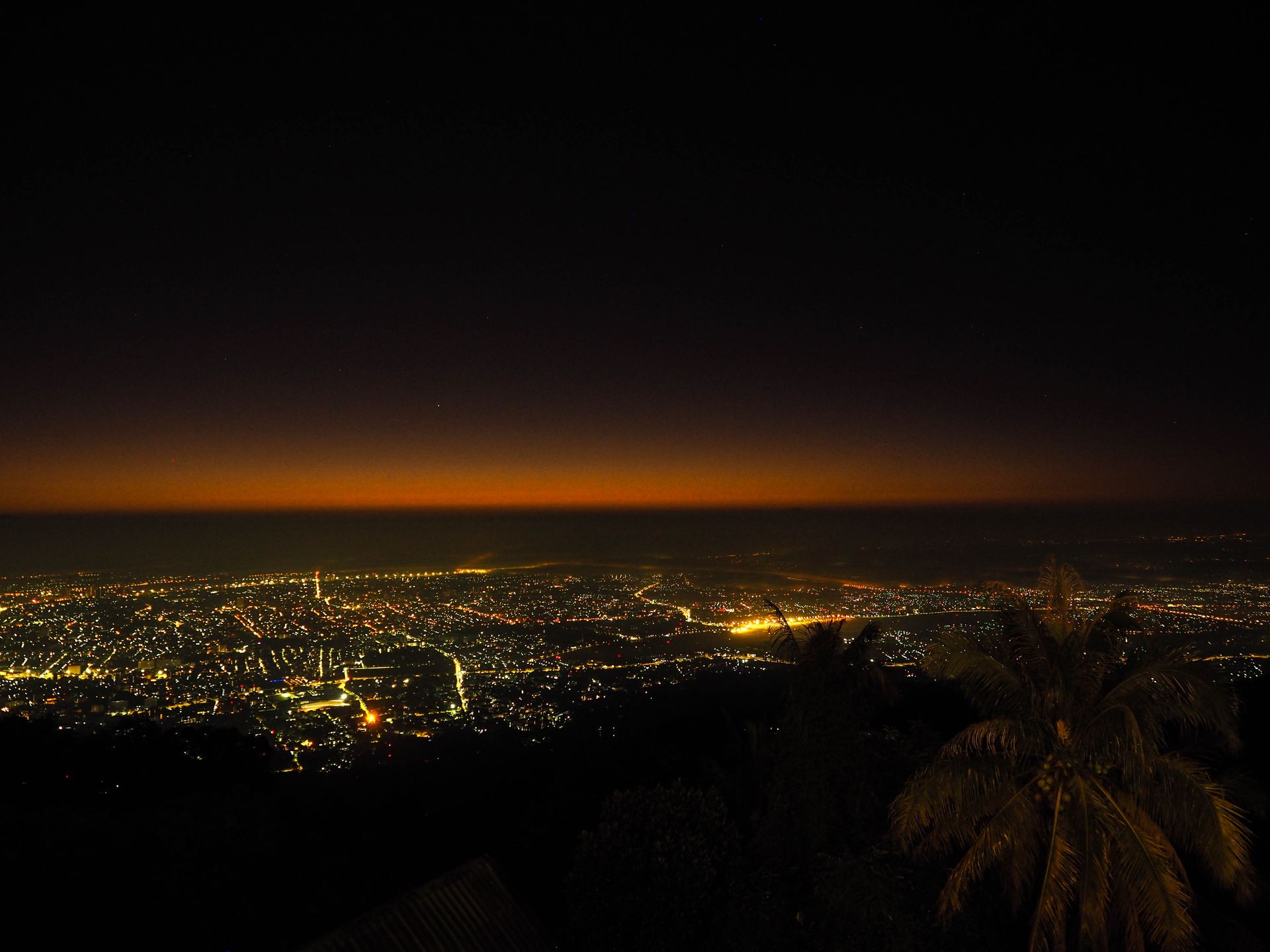
⚠️ For Doi Suthep, leave before sunrise — ideally departing the old city around 5am. The experience at dawn is completely different from a daytime visit: the temple quiet, the air cool, and the city spread out below you in the early light
Doi Suthep🔗 — at dawn
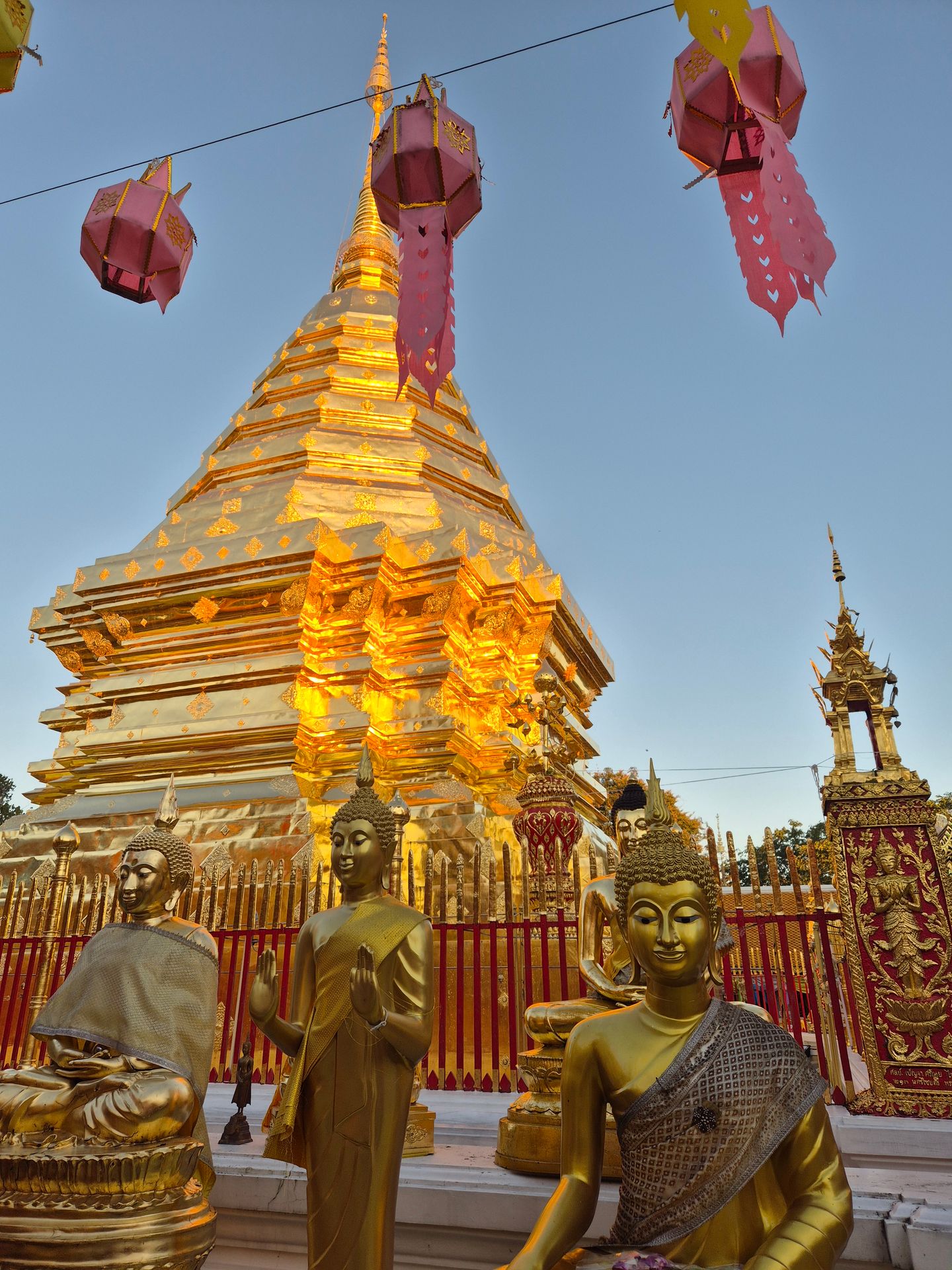
Chiang Mai's most sacred temple, sitting at 1,073 metres above sea level on the mountain that watches over the entire city. The 309-step naga staircase leading up to the temple complex is an experience in itself — climb it in the dark, arrive at the top as the sky begins to lighten, and watch the sunrise over the valley below. It's one of the most extraordinary things I've done in Southeast Asia.
The experience I'd strongly recommend is the guided tour with a former Buddhist monk. The monk explains how the Buddhist world actually works — the rituals, the hierarchy, the meaning behind what you're seeing — in a way that no sign or guidebook can. You participate in the morning ceremonies, understand what the offerings mean, and leave with a completely different relationship to the temples you'll visit for the rest of your trip. Watching the sun come up over Chiang Mai from Doi Suthep, next to a monk who has spent years in that same compound, is not something you forget.
🕒 Open daily 6am–8pm (arrive before opening for the dawn experience)
💸 30 THB (~€0.80)
👉 Book the monk-guided sunrise tour here 🔗 — book in advance, spots are limited
Doi Inthanon National Park🔗
If you have a scooter or want to book a day trip, the drive further into the mountains to Doi Inthanon — the highest peak in Thailand at 2,565m — is one of the most beautiful routes in the north. The park contains twin royal chedis, cloud forests, waterfalls, and views into Burma on clear days.
🕒 Park open daily 6am–6pm
💸 300 THB (~€8) park entry
👉 Book a guided day trip here 🔗 if you prefer not to self-drive
Baan Kang Wat Artist Village🔗 — afternoon
On the way back from Doi Suthep, stop at this cluster of independent studios and creative spaces at the base of the mountain. Artists, ceramicists, and small-batch food producers have set up here in converted wooden houses around a courtyard. Calm, unhurried, and completely unlike the tourist markets in the old city.
🕒 Open Thursday–Sunday from ~10am
💸 Free entry
Chiang Mai Night Bazaar🔗 — evening
The long-established night market stretching along Chang Khlan Road. More touristy than the Sunday Walking Street, but still worth seeing: handicrafts, silver jewellery, clothing, and bags alongside food stalls and outdoor restaurants. Good for souvenir shopping and people-watching. Go after dinner or combine the two.
🕒 Open nightly from ~6pm
💸 Free entry
Day 3 — Bonus Day: Choose Your Chiang Mai
No fixed agenda today — pick what suits where you are after two days in the city.
Cooking class
A northern Thai cooking class is one of the most rewarding things you can do in Chiang Mai. The cuisine here — khao soi, sai oua sausage, laab — is distinct from central Thai cooking, and learning it in its home city with local ingredients from a morning market is genuinely special. You leave with recipes you'll use at home.
👉 Book in advance this cooking class 🔗
🕒 Half-day classes typically run 8:30am–1pm
💸 From ~€25
Sunday Walking Street (Wualai Road🔗)
(Sunday only) One of the best markets in Thailand. The street closes to traffic and fills with silver craftspeople, textile vendors, hill tribe embroidery, food stalls, and musicians. Considerably more local and less commercial than the Night Bazaar. If your third day falls on a Sunday, build your evening around this.
🕒 Open Sundays only, from ~5pm
💸 Free entry
Elephant Sanctuary
For those who want a half-day or full-day experience outside the city, a visit to an ethical elephant sanctuary is one of the most meaningful things you can do in northern Thailand. The experience of feeding, walking, and observing elephants in a humane setting is unforgettable.
⚠️ This is one area where you must not wing it. The elephant tourism industry around Chiang Mai is full of operators that present themselves as ethical but are not. Riding, performances, tight chains, overworked animals — it still happens constantly, even at places with convincing marketing. Never book on the street, through a random guesthouse, or with whoever approaches you in the old city. Only book through a verified, reputable operator — I've linked one below that I trust
👉 Book through this operator 🔗 — don't go without a pre-booked, verified tour
🕒 Half-day and full-day options available, departing from the old city
💸 From ~€60
Waroros Market (Kad Luang)🔗
Chiang Mai's oldest and most authentic market, used daily by locals rather than tourists. Three floors of fresh produce, dried goods, northern Thai snacks, spices, flowers, and everything in between. Go hungry, eat from the food section on the ground floor, and wander without an agenda.
🕒 Open daily from ~4am to 6pm
💸 Free entry
Northern Thai Food
Chiang Mai is one of the best places to eat in Thailand — and the food here is unlike what you'll find in Bangkok or the south. Northern Thai cuisine (Lanna food) has its own flavour profile: less sweet, more herbal, with dishes that reflect the cooler mountain climate and the trade routes that once ran through this part of the country.
The key things to eat:
- Khao soi — the signature dish of the north. A rich, slightly spicy coconut curry broth over egg noodles, topped with crispy fried noodles, pickled mustard greens, shallots, and lime. Order it everywhere and you'll notice how much it varies between restaurants.
- Sai oua — northern Thai pork sausage packed with galangal, lemongrass, kaffir lime, and chillies. Eaten as a snack or with sticky rice.
Laab moo — minced pork salad with toasted rice powder, fresh herbs, and dried chillies. Sharper and more complex than the central Thai version.
👉 For a full guide to what to eat across Thailand — and my personal recommendations for Chiang Mai — read my complete guide to the best food in Thailand 🔗
👉 Planning a longer trip? Check out my complete 3-week Thailand itinerary🔗 for the full route, from Bangkok to the northern temples and the eastern islands
Related Articles
| 10 Essential Things to Know Before Visiting Thailand |
| Best Food in Thailand |